Correct Weight for a Greyhound
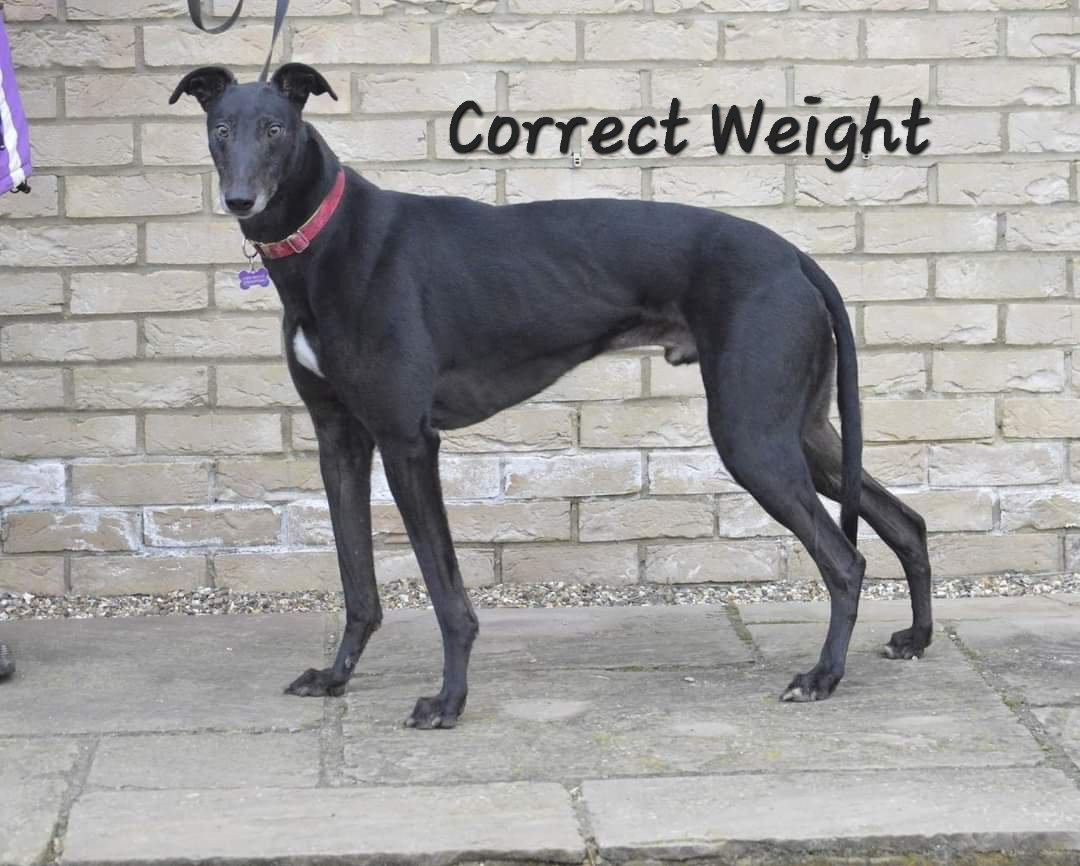
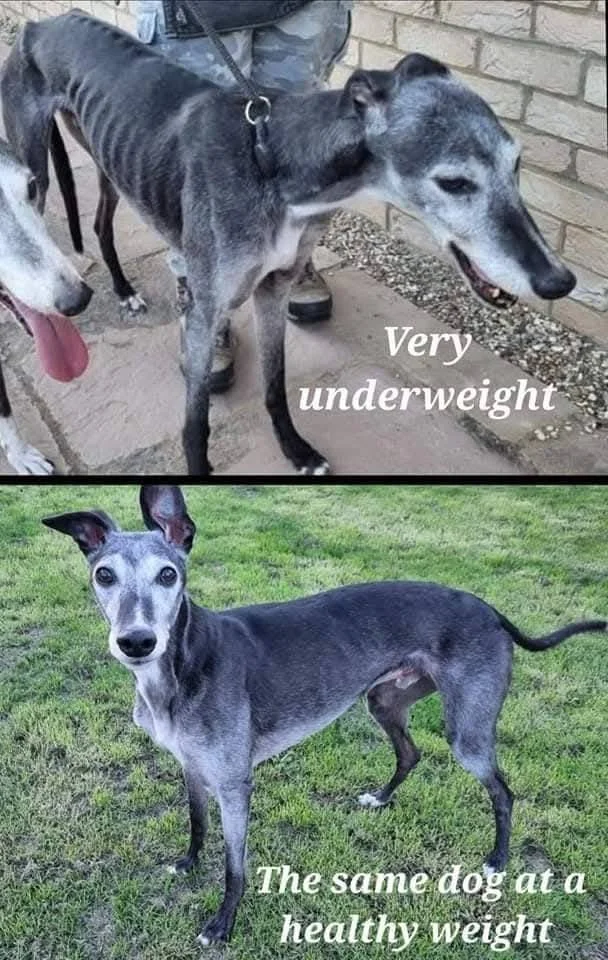
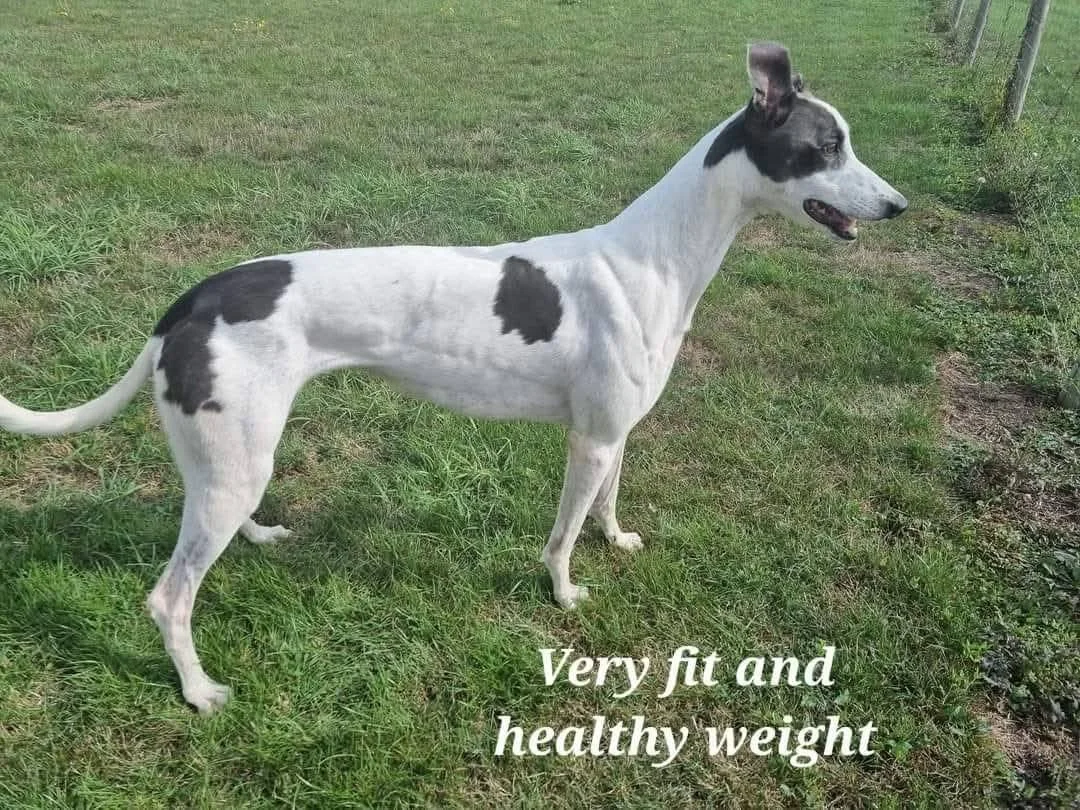
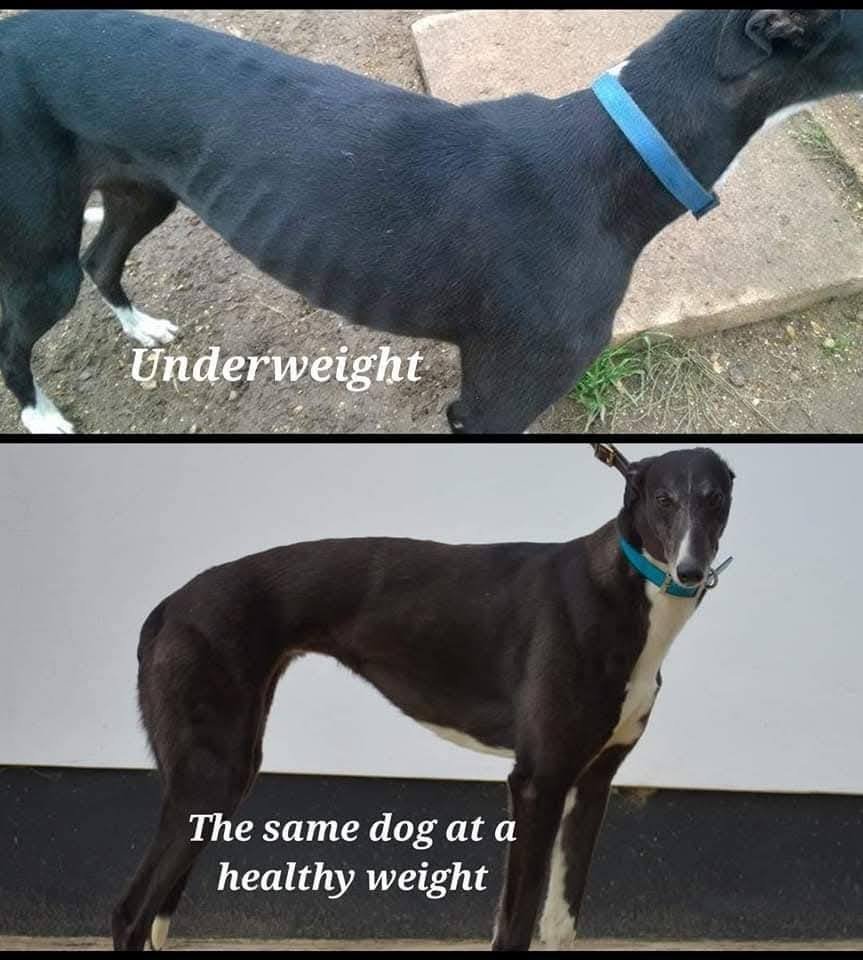
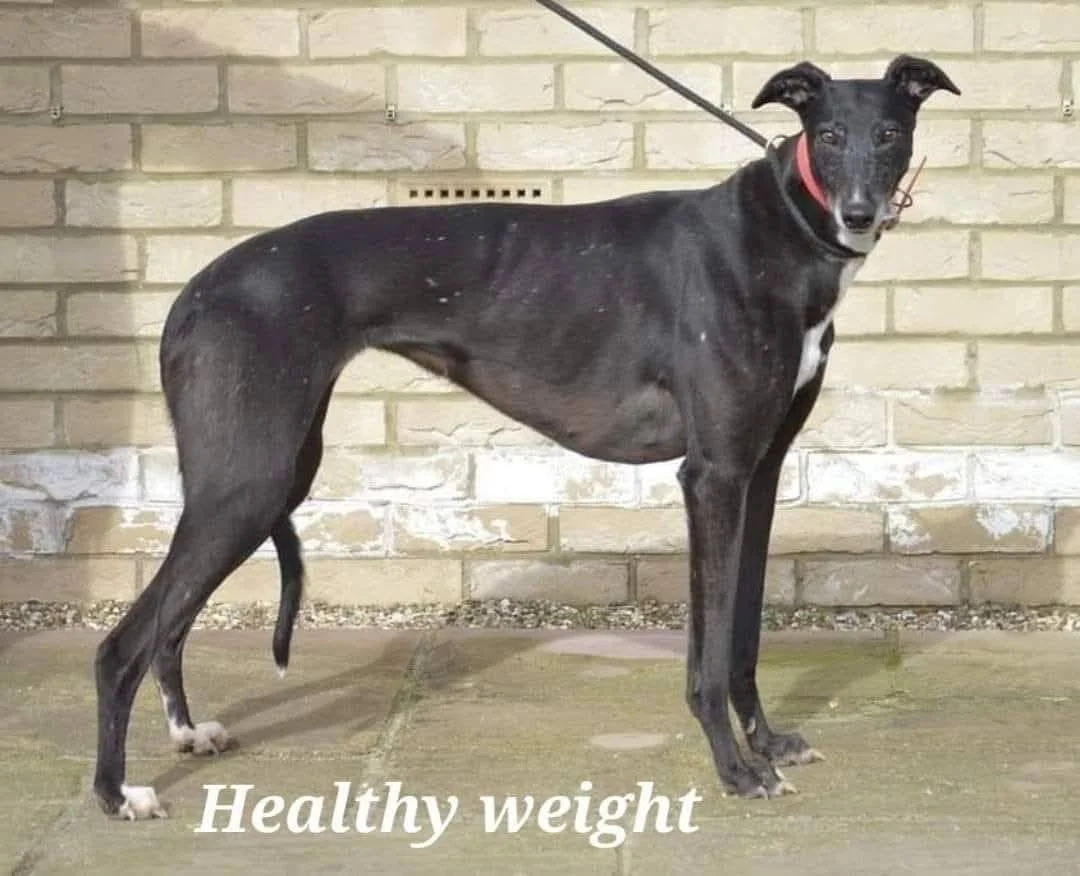
We get asked a lot by adopters about Greyhound weight, and we also regularly see posts on social media from owners worried that their Greyhound may be too thin or overweight, so we thought it may be helpful to share some photos as a visual guide.
Obviously there can sometimes be reasons why a dog may be slightly underweight or overweight, such as medical conditions, age, metabolism or being a fussy eater. This blog is simply intended as a general guide in pictures for retired Greyhound owners.
If you feel your dog is underweight or overweight and there is no obvious underlying cause, you may need to adjust their food intake accordingly to help them gain or lose weight gradually. Remember that the amounts suggested on food packaging are only guidelines. All dogs are individuals, and some may need more or less than the recommended amounts. Using your eyes and hands to regularly assess your dog’s body condition is often the best way to help maintain your dog’s weight.
If your dog is losing weight for no obvious reason, ensure they are up to date with worming treatment and consult your vet if the issue continues.
It is important that your dog is fed a balanced and healthy diet to help maintain a good weight. You can find more information about feeding here: Feeding a balanced diet to your Greyhound — Barley Greyhound Sanctuary
Your Greyhound’s racing weight can also be a useful guide and can often be found by searching their racing name. You can also join the “Your Greyhound’s History” Facebook group for help finding your dog’s history, racing records and previous weight.
Below are example photos showing Greyhounds at a healthy weight, underweight and overweight.
(Please note: the underweight hounds pictured below are now fit, healthy and happily settled in their forever homes 🖤)